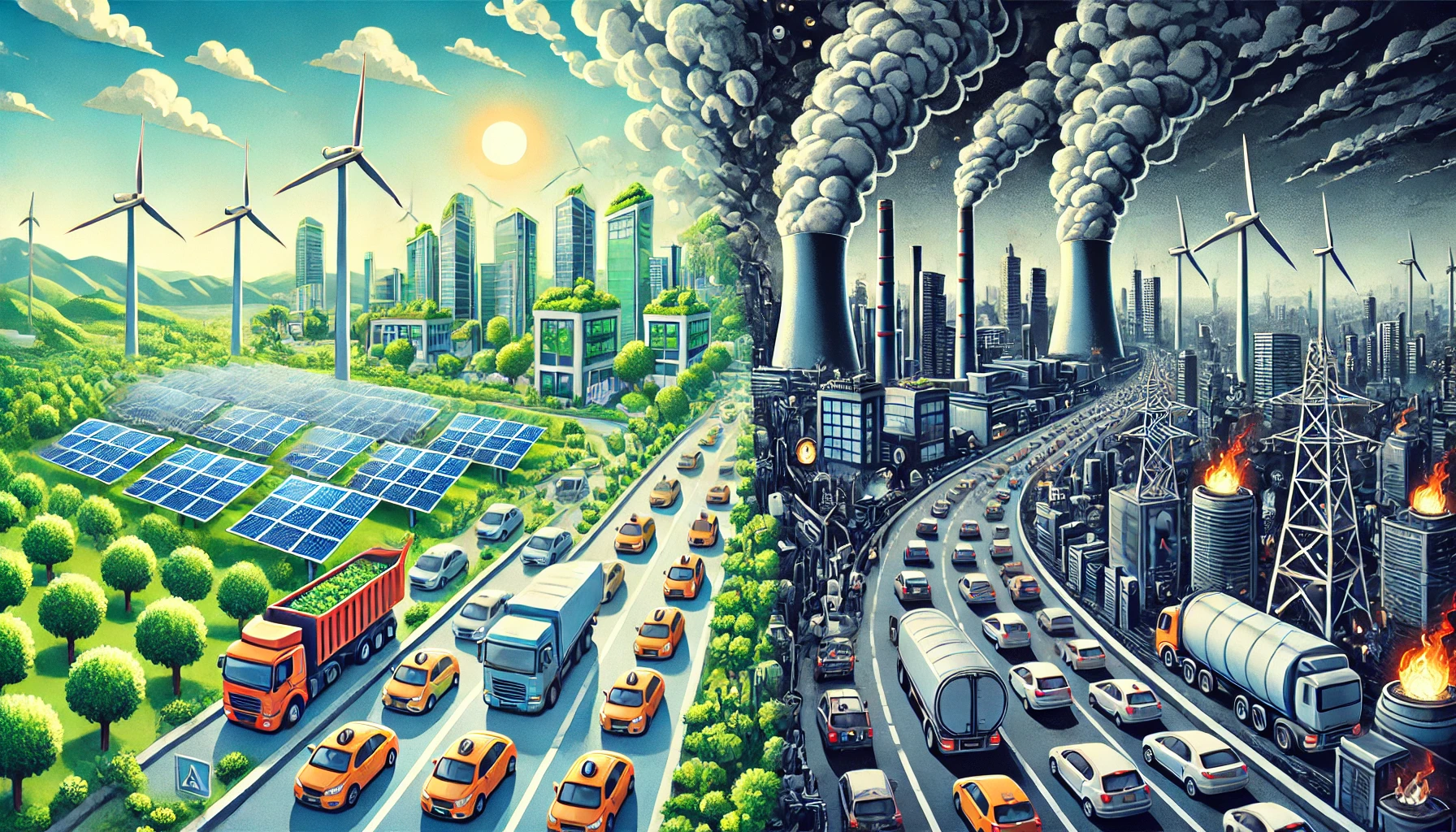
It’s 2050 and the world is grappling with an unprecedented energy crisis. The lights flicker as you sit in your home, a stark reminder of the rolling blackouts that have become part of daily life. The once-reliable flow of electricity is now sporadic and the cost of energy has skyrocketed, making it a luxury that only the wealthy can afford. For the majority, life has become a constant struggle to balance basic needs with the availability of power.
This dire situation is the result of decades of unsustainable energy consumption. Our reliance on fossil fuels — coal, oil, and natural gas — has drained the planet’s reserves. The once vast deposits have been depleted, leaving only the dirtiest and most difficult to extract resources. As a result, the world has been forced to fall back on coal, a cheap but highly polluting energy source that contributes massively to carbon emissions and air pollution.
The consequences are clear in the choking smog that blankets cities, in the rivers and lakes poisoned by acid rain and in the erratic weather patterns that disrupt daily life. The carbon footprint of this energy crisis is enormous, with greenhouse gas emissions continuing to rise even as the planet’s natural resources dwindle. The climate has become increasingly unstable, with more frequent and severe storms, droughts and heatwaves, each one exacerbating the global challenges of food security, water availability, and public health.
In this future, the energy demands of a technology-driven society have only increased. Every gadget, every device and every appliance in our homes draws power, contributing to the strain on the energy grid. But the cost of this convenience has been high. The environmental degradation and resource depletion have not only made energy more expensive but also harder to come by. Many communities now live in darkness, with limited access to electricity, while others suffer from the health impacts of living near coal-fired power plants.
The shift to renewable energy sources, which could have mitigated these problems, was too slow and too limited. Solar, wind and hydro power remain underutilized, hampered by inadequate investment and infrastructure. Instead of leading the transition to clean energy, many countries doubled down on fossil fuels, prioritizing short-term economic gains over long-term sustainability.
But even in this bleak scenario, there is hope.
The future we face depends on the choices we make today.
Transitioning to renewable energy is not just an option — it’s a necessity if we want to avoid the worst impacts of climate change and secure a stable energy future. By investing in renewable energy technologies, we can reduce our carbon footprint, create jobs and ensure that power is available to everyone, not just the privileged few.
You can start by reducing your energy consumption at home. Simple actions like
- turning off lights when you leave a room,
- unplugging devices when they’re not in use
- and using energy-efficient appliances can make a big difference.
Consider investing in solar panels for your home or supporting community renewable energy projects. Every kilowatt saved is a step toward a more sustainable future.