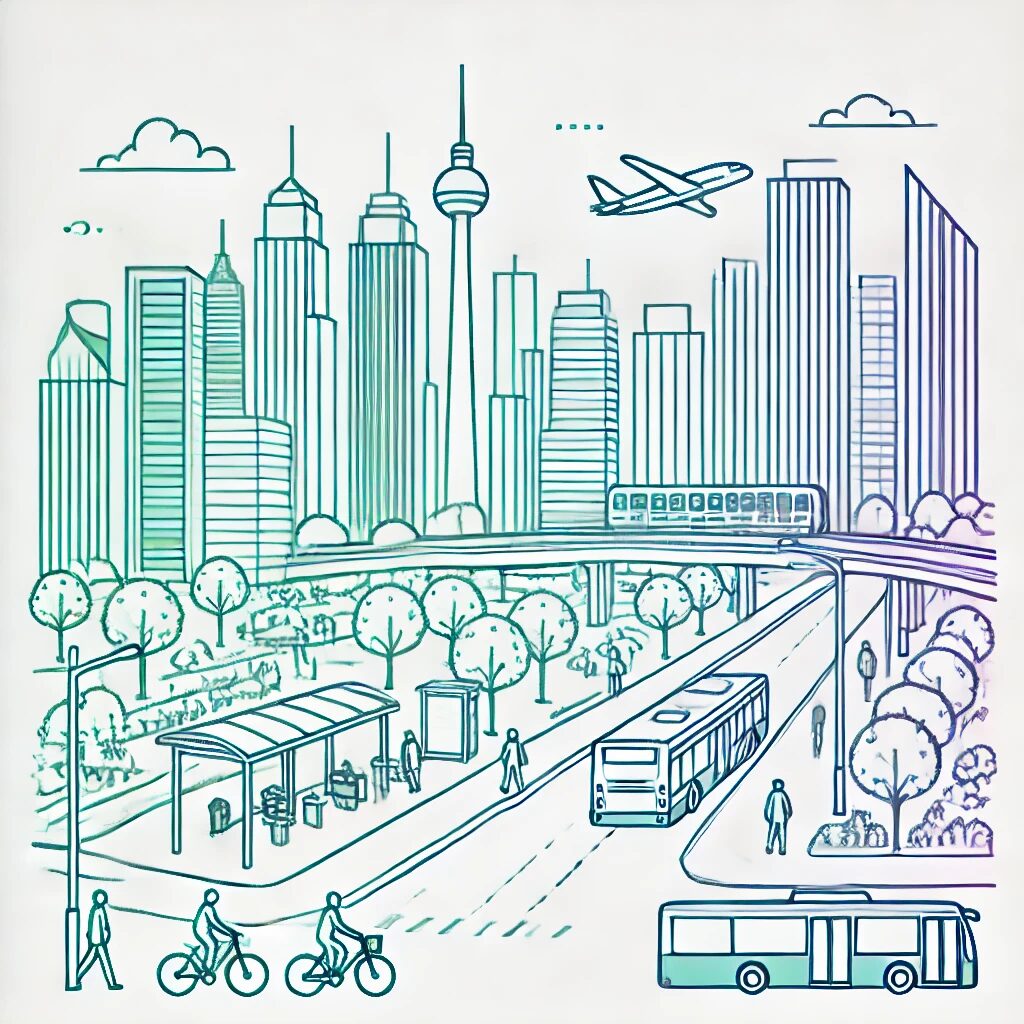
Concrete, asphalt, cars in the cities heat up during a summer day and absorb amounts of heat. Surfaces can reach up to 80°C. The interior of a dark car can exceed 60°C. After sunset, this heat is slowly released, staying trapped in the city through the night. There’s nowhere for it to go.
Parts of the city overheat more – places with a few trees and lots of asphalt and concrete. These areas often include schools, hospitals or apartment blocks. They form ‘urban heat islands’. During heatwaves, cities can be several degrees hotter than the surrounding countryside.
Green spaces lower temperatures by releasing water vapor through leaves. A tree or a patch of grass can cool the surrounding area by several degrees.
Even a small park can make a street noticeably cooler.
Every tree in a city matters.
It helps us survive.
Sources:
Reuters graphics: The floor is lava
Leave a Reply