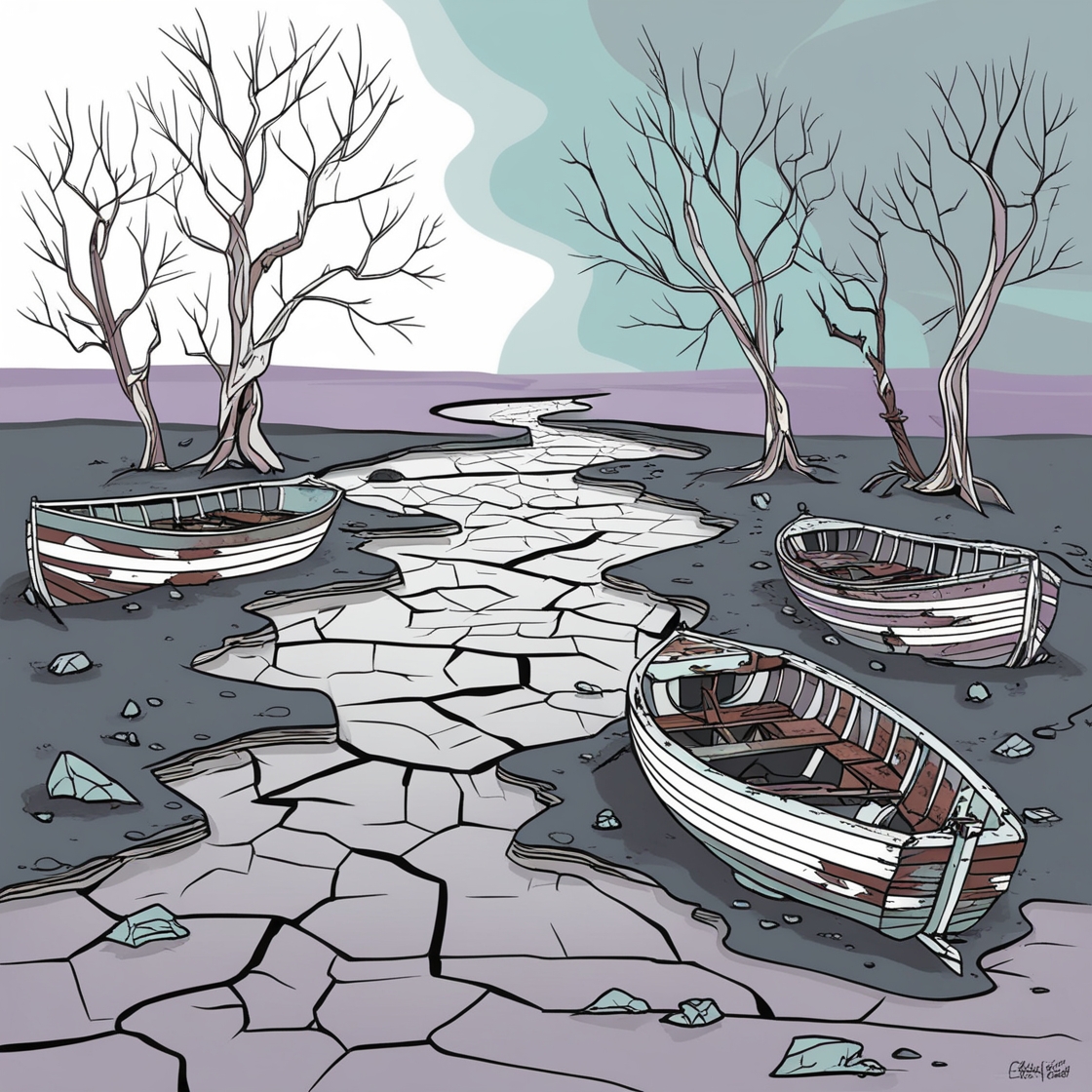
It’s the year 2050, and the once mighty rivers that coursed through our cities and countrysides have been reduced to mere trickles or dried-up beds of cracked earth. In a world where water conservation was never a priority, the consequences are stark and severe. As you walk along the parched banks of what was once a thriving river, the silence is deafening. The sound of flowing water, once a constant companion, is gone, replaced by the dry rustle of brittle plants and the occasional gust of hot wind.
The effects of water scarcity are felt far and wide. Without adequate water to sustain them, ecosystems have collapsed. Fish populations have plummeted, and the birds and animals that once relied on these rivers have either migrated to more hospitable areas or perished. The absence of water has turned fertile lands into deserts, withered crops stand as monuments to the climate that has become increasingly hostile.
Cities that once thrived on the banks of these rivers are now struggling to survive. Water rationing is the norm, with strict limits on usage that force residents to make difficult choices about how to allocate their daily allowance. Without sufficient water, sanitation suffers, leading to outbreaks of diseases that were once easily preventable. The economic impact is just as severe — agriculture, industry, and even tourism have ground to a halt, leaving once-vibrant communities on the brink of collapse.
The relentless heat waves, made worse by climate change, have turned the land into a tinderbox. Wildfires have become an almost daily occurrence, devastating forests, homes, and lives. The fires release massive amounts of carbon dioxide, exacerbating the very problem that caused them. The air is thick with smoke, and the sky is often an ominous shade of orange, blocking out the sun and casting an eerie glow over the desolate landscape.
This is the reality of a world where water conservation was never prioritized, where the carbon footprint of our actions—whether it was excessive water use, wasteful irrigation practices, or the unchecked release of greenhouse gases—was ignored. The consequences are not just environmental; they are deeply personal, affecting every aspect of life. People are forced to migrate in search of water, leaving behind their homes, communities, and even countries. The strain on resources leads to conflicts, as nations grapple with the challenge of providing for their citizens in an increasingly resource-scarce world.
But this grim future is not set in stone.
Start by conserving water in your daily life — small actions like turning off the tap while brushing your teeth, fixing leaks and installing water-efficient fixtures can make a significant difference. Support policies and initiatives that protect our water sources and promote sustainable water management practices.
Additionally, consider the indirect ways your lifestyle affects water resources. The production of many goods, from food to clothing, consumes vast amounts of water. By reducing your consumption, choosing products made with sustainable practices, and being mindful of your overall carbon footprint, you can help reduce the pressure on our precious water supplies.