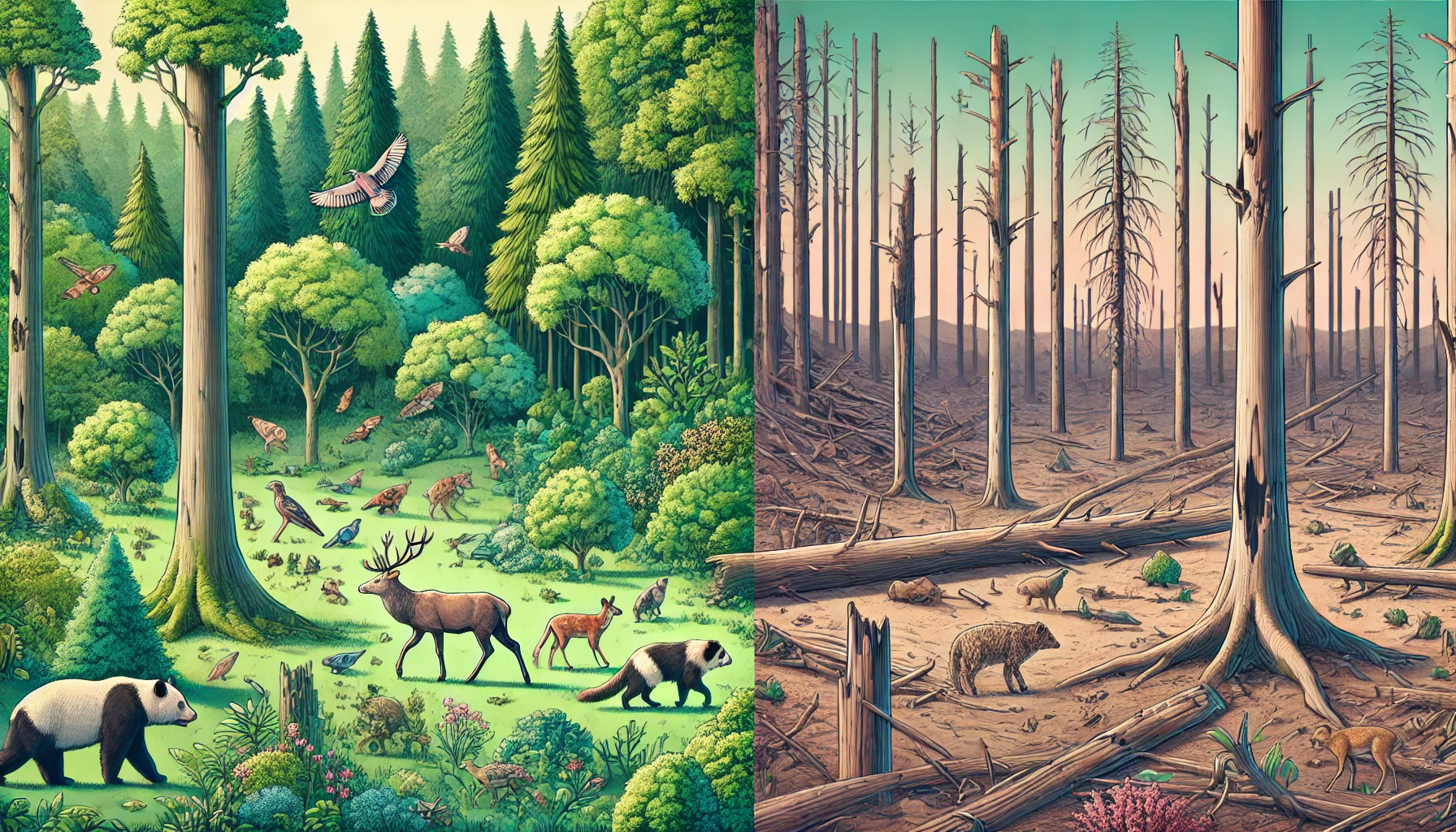
It’s 2050, and the world has grown eerily quiet. The vibrant chorus of birds that once greeted the dawn is gone, the rustling of animals in the underbrush has ceased, and the buzzing of bees among the flowers is now a distant memory. The landscape, once teeming with life, now feels desolate and empty. The loss of biodiversity—a consequence of habitat destruction, pollution, and climate change—has left the planet impoverished in ways we’re only beginning to comprehend.
The extinction of species that once played crucial roles in their ecosystems has set off a chain reaction, destabilizing food webs and disrupting natural processes. Pollinators like bees and butterflies, essential for the reproduction of countless plants, are among the most notable losses. Without them, crops fail, leading to food shortages and economic instability. The carbon footprint of agriculture has skyrocketed as farmers are forced to rely more on energy-intensive methods to produce the food we need, further exacerbating the climate crisis.
Forests, which once housed a rich diversity of life, have been decimated by logging, agriculture, and urban expansion. These forests were not just home to countless species but also acted as vital carbon sinks, absorbing carbon dioxide and helping to regulate the global climate. Their destruction has released vast amounts of carbon into the atmosphere, accelerating global warming and making the planet even more inhospitable to life.
Marine ecosystems have not been spared. Overfishing, pollution, and warming oceans have led to the collapse of fisheries and the death of coral reefs, which once supported a diverse range of marine life. The oceans, which cover more than 70% of the Earth’s surface, are now quieter and emptier, with many species driven to extinction. The loss of marine biodiversity has disrupted the delicate balance of ocean ecosystems, affecting everything from the smallest plankton to the largest whales.
In this world, people have begun to realize the deep connection between biodiversity and human well-being. The disappearance of species has led to the loss of ecosystem services that were once taken for granted—clean air, fresh water, fertile soil, and climate regulation. The absence of these services has made life more difficult and precarious, particularly for those in vulnerable communities who rely directly on natural resources for their livelihoods.
But it’s not just about survival. The loss of biodiversity has also diminished the beauty and wonder of the natural world. The sight of a butterfly flitting from flower to flower, the sound of a frog croaking in the night, the thrill of spotting a deer in the forest—these experiences are becoming increasingly rare. The world feels lonelier without the rich tapestry of life that once surrounded us.
Yet, this future is not inevitable.
There is still time to protect the planet’s biodiversity and restore the ecosystems that have been damaged. You can reduce your impact by making more sustainable choices in your daily life — opt for products that are sourced sustainably, reduce your use of plastics that end up in the oceans, and minimize your carbon footprint by consuming less and supporting clean energy.
Imagine a future where the Earth is once again alive with the sounds and sights of nature, where ecosystems are healthy and resilient, and where human and non-human life can thrive together.