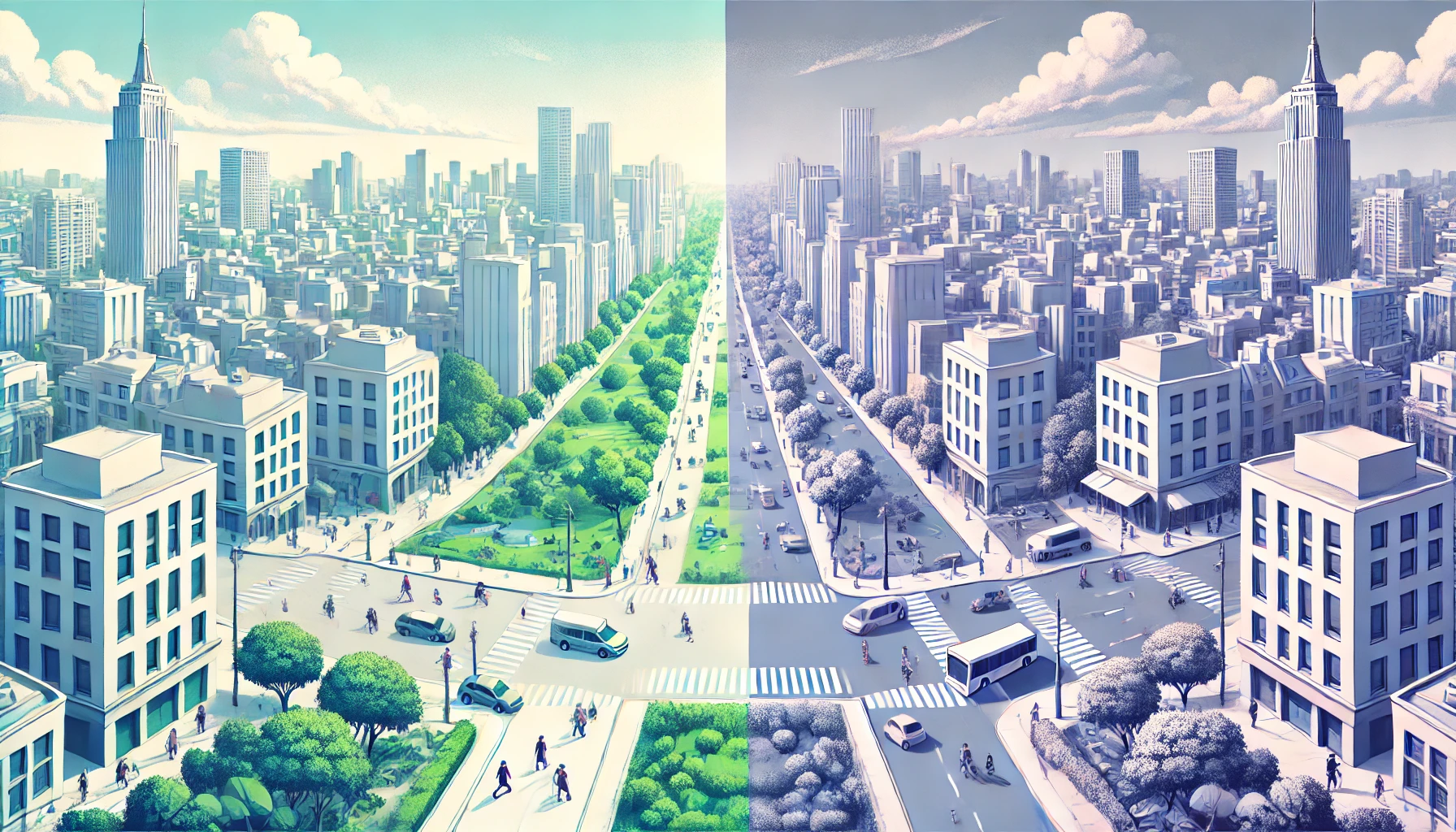
It’s 2050 and the first thing you notice as you step outside is the oppressive blanket of smog that hangs over the city. The sun, once bright and welcoming, now struggles to pierce through the thick layers of pollution, casting an eerie, muted light over the streets. The sky, once blue, is a perpetual grey, choked by the emissions from millions of vehicles and unregulated industrial activity. You can barely see the tops of buildings through the haze and the air smells faintly of burning — an ever-present reminder of the toxic cocktail of pollutants you’re inhaling.
The health impacts are unavoidable. You slip on your mask, not because of a pandemic, but because the air quality is so poor that going outside without protection is dangerous. Respiratory illnesses have become the norm, with asthma, bronchitis and even lung cancer rates soaring. Hospitals are overwhelmed and people have adjusted to a new way of living — indoors, with air purifiers working overtime just to make the air breathable.
The cause of this environmental disaster is clear. Decades of unchecked vehicle emissions have left our cities drowning in exhaust fumes. Fossil fuel-powered cars, trucks and buses dominate the roads, each one contributing to the toxic cloud overhead. The carbon footprint of transportation has spiraled out of control, with the vast majority of energy still coming from coal and oil. The failure to adopt cleaner, renewable energy sources has sealed the fate of our skies.
Industrial activities, too, have played a significant role in this dystopian reality. Factories operate without regard for the environment, releasing tons of pollutants into the atmosphere daily. Regulations that could have curbed these emissions were either weak or nonexistent, sacrificed in favor of short-term economic gains.
The result?
Smog-filled skies that obscure the natural beauty of the world and slowly poison those who live beneath them.
Nature has not been spared. The constant onslaught of pollution has devastated local ecosystems. Plants struggle to survive in the acidic soil and trees that once lined the streets are now brittle and lifeless, their leaves coated in a fine layer of soot. Wildlife has fled the cities, unable to thrive in such a hostile environment. The carbon dioxide levels are higher than ever, driving climate change and leading to more extreme weather events that compound the existing problems.
But this grim vision of the future is not inevitable. There is still time to clear the skies and breathe freely again. The choices we make today will determine the quality of the air we breathe tomorrow.
Start by reducing your reliance on fossil fuel-powered vehicles. Opt for walking, cycling or using public transportation whenever possible. If you drive, consider switching to an electric or hybrid vehicle, which produces far fewer emissions.
Support clean energy initiatives in your community and advocate for stronger environmental regulations that limit industrial emissions. Every voice counts when it comes to pushing for policies that prioritize public health and environmental protection.
By making these changes, we can drastically reduce our carbon footprint and prevent the smog-filled skies of 2050 from becoming a reality.
Imagine a future where the sky is clear and blue, where the air is fresh and clean and where people can live without fear of the very air they breathe.
It’s a future we can achieve, but only if we act now.