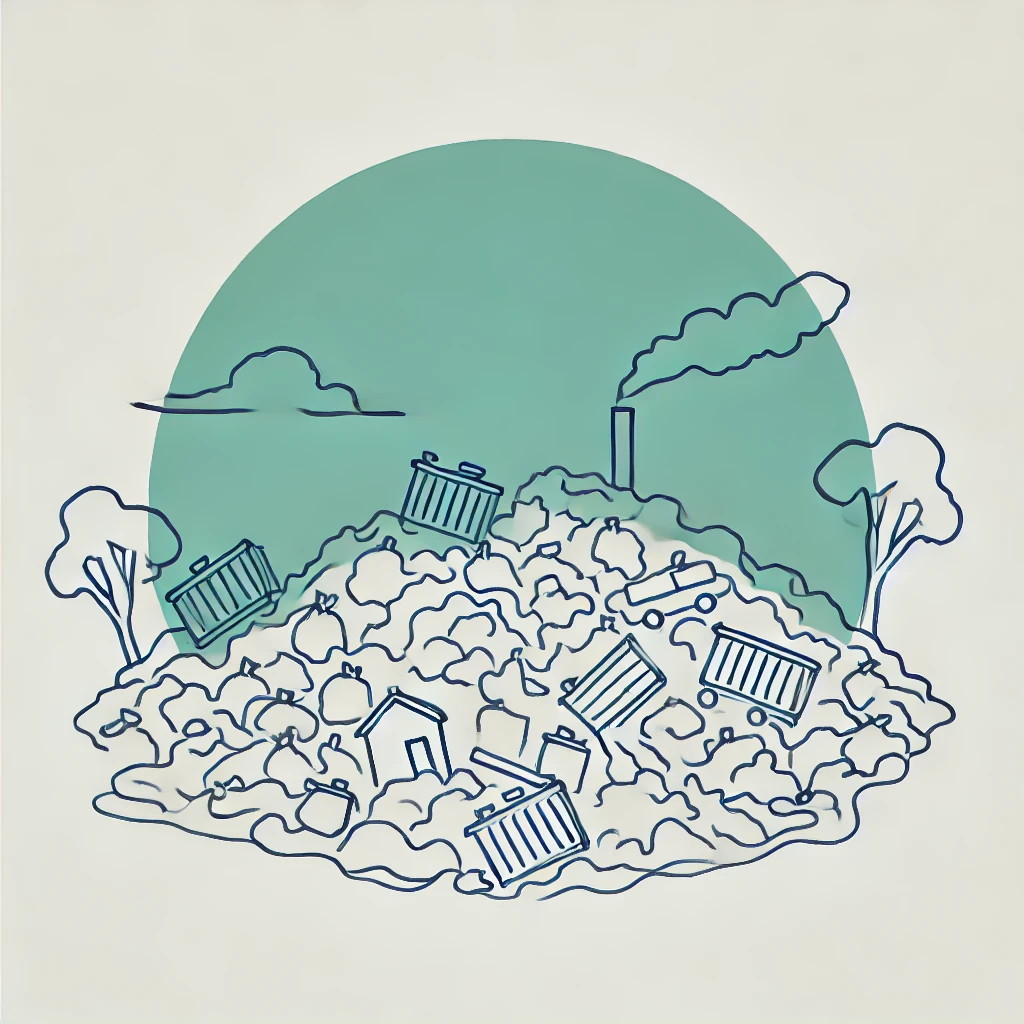
Fast forward to the year 2050 and you find yourself standing at the edge of what was once a scenic countryside. Now, it’s dominated by a towering mountain of waste — a landfill that stretches as far as the eye can see. This is a world where recycling was dismissed as too much hassle, where the convenience of single-use plastics trumped long-term sustainability, and where the concept of a circular economy never took root.
The landscape is a patchwork of discarded electronics, plastic bottles, food waste and countless other remnants of our consumer-driven society. The stench is overpowering, a constant reminder of our failure to manage waste responsibly. Decomposing materials release methane, a potent greenhouse gas, into the atmosphere, further contributing to global warming. The sheer volume of waste reflects the massive carbon footprint generated by our throwaway culture, where items are designed for obsolescence and convenience outweighs the cost to the environment.
Natural resources have been consumed at an alarming rate, with little thought given to their replenishment. Forests have been clear-cut for paper and packaging, minerals have been stripped from the Earth to feed our insatiable demand for new gadgets and fossil fuels have been burned to power the factories churning out endless products. The cost of this unchecked consumption is evident in the barren landscapes and polluted waters that surround us.
The once-abundant resources are now scarce, driving up prices and leading to conflicts over what remains. But perhaps the most tragic consequence of our wasteful habits is the depletion of natural beauty. Forests, rivers and oceans — once teeming with life — are now choked with debris. The vibrant ecosystems that supported diverse wildlife have collapsed, leaving behind sterile environments where only the hardiest species can survive.
Living in this world means grappling with the daily reality of overflowing landfills. The waste doesn’t just stay in these designated areas; it seeps into our neighborhoods, our oceans and even our food. Microplastics have infiltrated every corner of the Earth, found in everything from the water we drink to the air we breathe. The environmental toll is staggering and the health impacts are becoming increasingly severe.
However, the future doesn’t have to unfold this way.
By taking steps today to reduce our waste and embrace a circular economy, we can avoid this dystopian outcome. Start by rethinking your consumption habits:
- do you really need that new gadget or could you repair the old one?
- choose products with minimal packaging, and always opt for reusable over disposable items.
Each choice you make contributes to a smaller carbon footprint and a healthier planet.
Recycling is a crucial part of reducing the waste that ends up in our landfills. By separating your recyclables, you’re helping to conserve natural resources and reduce the emissions associated with producing new materials.
Composting organic waste can significantly reduce methane emissions from landfills, turning food scraps into valuable nutrients for the soil instead of harmful gases for the atmosphere.